"Perfect. Will be back for more!"
Anna S.
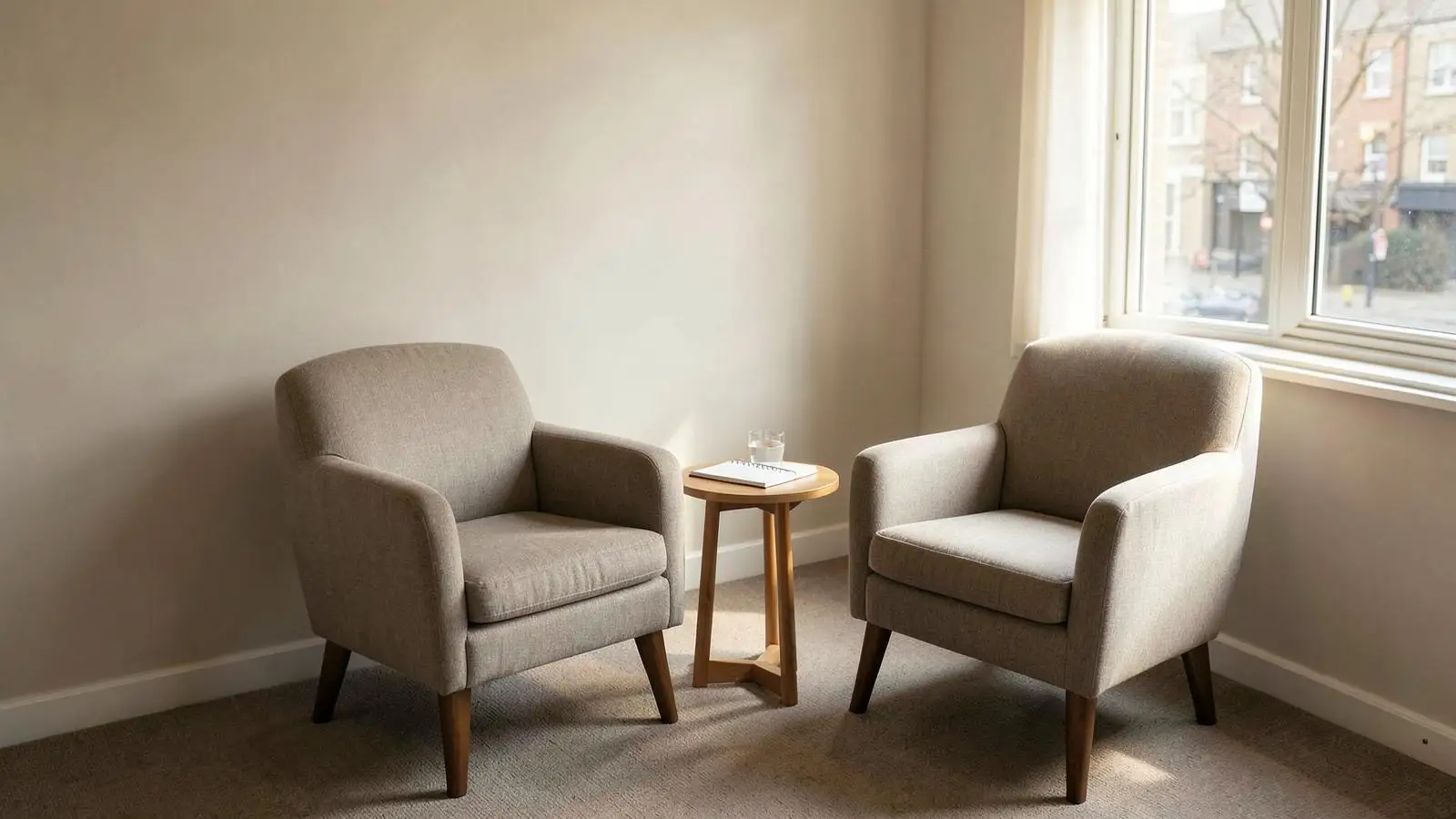
Practical, goal-focused coaching in Holborn for confidence, decisions, habits and personal change.
Coaching is a forward-looking, practical way of working on a goal, decision or change you want to make. Unlike counselling or psychotherapy, it does not usually focus on diagnosing or treating emotional difficulty, though a good coach will recognise when something needs a different kind of support and say so. Our Holborn clinic offers coaching alongside related approaches such as hypnotherapy, breathwork and yoga.
Coaching is a structured conversation aimed at helping you reach a specific goal, make a decision, build a habit or work through a change, using questions and practical tools rather than clinical treatment. It tends to be shorter term and more directive than counselling, focusing on where you want to get to rather than on diagnosing or treating an emotional difficulty. Sessions are usually held regularly over a set period, with clear goals agreed at the outset and reviewed as you go.
Coaching is often used to build confidence ahead of a specific situation, such as a presentation, interview or change of role.
A structured conversation with someone outside the situation can help clarify a decision you have been going back and forth on.
Building or breaking a habit, such as exercise, sleep or work patterns, is a common practical focus for coaching.
Coaching can help you think through how you are managing pressure and workload, and what practical changes might help.
Some people use coaching to think through career questions or a sense of being stuck, without it becoming therapy.
At our clinic coaching is sometimes combined with hypnotherapy, breathwork or yoga, where a practitioner is trained in more than one.
You talk about what you want to work on and what a good outcome would look like, and agree with your coach how sessions will run.
Together you set out specific, realistic goals for the coaching, which gives the work something concrete to aim at.
Sessions usually happen weekly or fortnightly, working through what has come up since the last meeting and what to try next.
A final session, or a series of check-ins, to look at what has changed and what you want to carry forward on your own.
Clinical hypnotherapist, coach, yoga teacher and Reiki practitioner, combining coaching with hypnotherapy and breathwork for confidence, stress management and habit change.
View full profileCertified practitioner of neuro-linguistic programming, hypnotherapy and Time Line Therapy, also working as a breathing and mind performance coach with adults, young people and athletes.
View full profileA coaching session is a structured conversation rather than free-ranging chat. Your coach will usually ask what has happened since the last session, what is working, what is not, and what you want to focus on today. Expect direct questions and, where relevant, practical tools such as goal-setting frameworks, visualisation or breathing techniques.
Coaching assumes you are broadly functioning well and want support moving toward a goal, rather than treating a clinical difficulty. If, in the course of coaching, something more suited to counselling or psychotherapy comes up, a good coach will say so and suggest that route instead.
Coaching differs from mentoring and consulting in that the coach does not typically tell you what to do or give expert advice on the subject itself. The work is built around your own thinking, drawn out through questions, with the coach acting as a structured, accountable sounding board.
Some coaches, including practitioners at our clinic, combine coaching with other trained skills, such as hypnotherapy or breathwork, which can add specific techniques into an otherwise conversation-based process.
Coaching is a less formally regulated field than counselling or psychotherapy, and the research base is smaller and more mixed, partly because goals and methods vary so much between coaches and clients. Reviews generally find coaching can support goal attainment, confidence and wellbeing for people without significant mental health difficulty, though it is not a substitute for treatment where a clinical condition is present.
We would rather be clear that coaching is not a treatment for depression, anxiety disorders or trauma, and will suggest counselling, psychotherapy or a GP referral if that looks more appropriate than continuing with goal-focused coaching.
Coaching is not a regulated profession in the United Kingdom, and anyone can call themselves a coach. The practitioners we work with combine coaching with recognised clinical training, such as hypnotherapy qualifications, which gives an added layer of training and ethical accountability beyond a coaching qualification alone.
If you are experiencing a mental health difficulty rather than a goal-focused question, tell your coach, as they should direct you toward counselling, psychotherapy or your GP rather than continuing with coaching alone.
None of these require a diagnosis or a crisis. Coaching starts from the assumption that you are managing well enough and want a structured way to move on something specific.
The first session is longer on questions than answers. Your coach will want the full picture of what you are trying to change, what you have already tried, and what would count as this having worked. That last point matters, because vague goals produce vague sessions. Agreeing a measurable outcome at the start gives you both something to check progress against.
Middle sessions tend to alternate between reviewing what you tried since last time and working on the next obstacle. Between-session actions are part of the method rather than optional homework, since most of the change happens in the fortnight between appointments rather than in the room. Fortnightly is a common rhythm, giving enough time to act without losing momentum.
Towards the end, sessions shift to consolidating what has changed and making sure it holds without the appointments. A good coaching relationship is designed to finish. If you find yourself booking indefinitely with no clear goal, that is worth raising directly with your coach.
"Perfect. Will be back for more!"
Anna S.
"Great location in the heart of the city! I would say it's a quiet oasis in a very busy area, a place to relax after a hard day at work."
Robert D.
Sessions are held at 46 Theobalds Road, a few minutes from Holborn station. Get in touch to arrange a time.
Book Appointment