"Perfect. Will be back for more!"
Anna S.
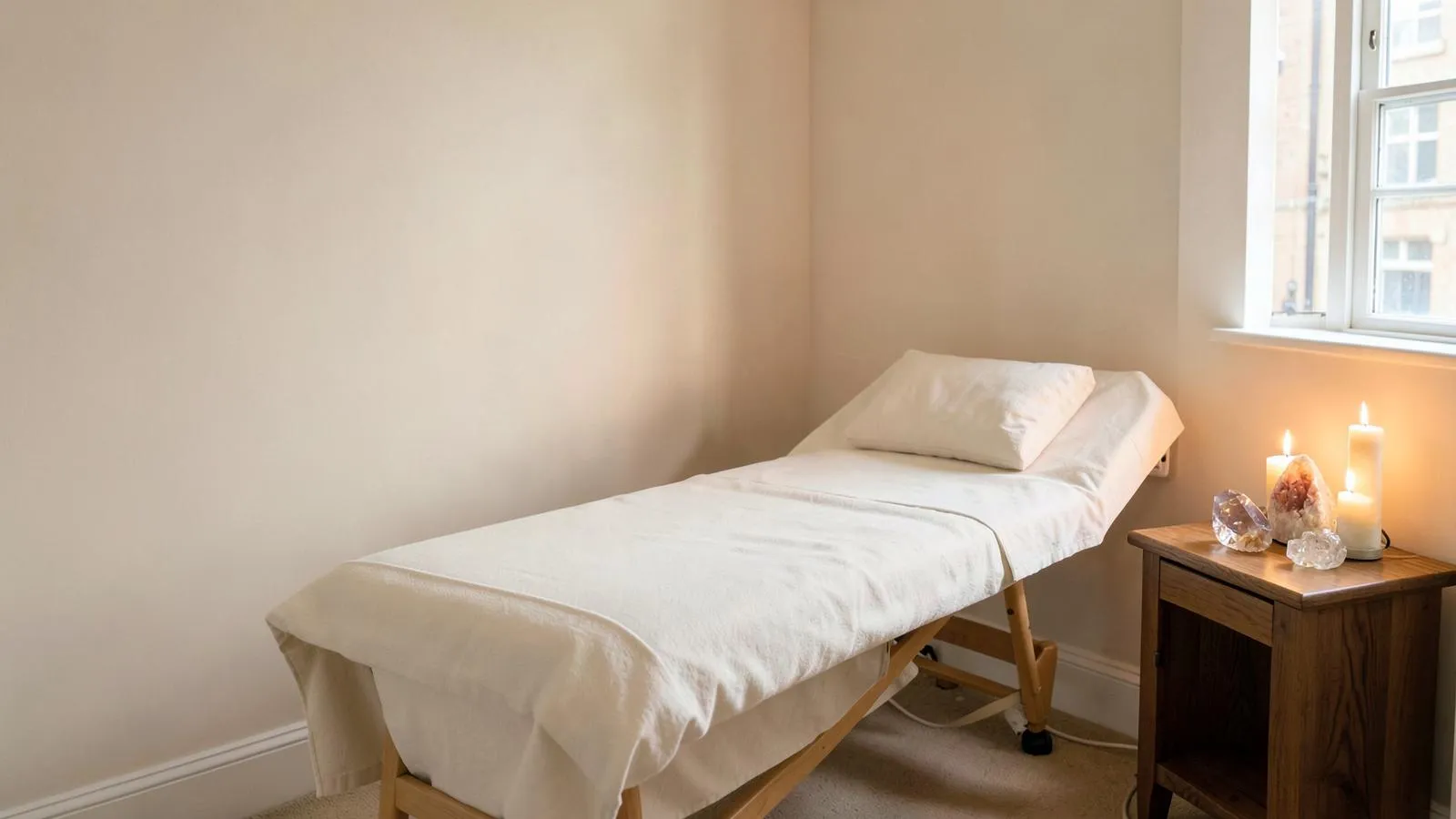
Gentle, fully clothed chakra balancing in Holborn, drawing on Ayurveda and energy work, for stress, low mood and a sense of feeling stuck or ungrounded.
Chakra balancing works with the seven energy centres described in yogic and Ayurvedic traditions, from the base of the spine to the crown of the head. Sessions are gentle and fully clothed, drawing on techniques such as sound, crystal placement and light or hands-off energy work depending on the practitioner. People usually come to us feeling stressed, stuck or emotionally flat, and want a calm, unhurried session as part of a wider approach to wellbeing.
Chakra balancing is a form of energy work based on the seven chakras described in yogic and Ayurvedic tradition, each associated with a different area of the body and aspect of wellbeing. A practitioner may use touch, sound, crystal placement or hands-off techniques, depending on their training, with the aim of easing tension and helping you feel calmer and more settled. It is a complementary and relaxation-focused practice rather than a medical treatment, and is offered here alongside Ayurvedic consultation and other energy-based approaches.
Sessions are slow and quiet, and many people find the experience itself noticeably calming, whatever they think of the underlying theory.
People sometimes come during a period of change or uncertainty, wanting space to settle rather than a specific physical complaint addressed.
Chakra work is sometimes used alongside talking therapy or other support, as a gentle addition rather than a replacement.
The relaxation that many people report after a session is sometimes carried through into better sleep that night, though this is a personal report rather than a proven effect.
Jana includes chakra balancing within a broader Ayurvedic consultation, alongside diet, lifestyle and massage advice.
For people who want a calming session without undressing or deep physical work, chakra balancing offers a gentler alternative to massage.
A conversation about what has brought you in, whether stress, low mood, sleep or simply wanting some quiet, unhurried time.
Your practitioner considers which areas seem to need attention, drawing on your history and, where relevant, Ayurvedic principles.
You lie fully clothed while your practitioner works with techniques such as sound, crystal placement or light touch, depending on their training.
A few minutes to reorient before you get up, plus any simple suggestions for the days that follow.
Ayurvedic practitioner offering consultations covering diet and daily routine, Ayurvedic treatments and massage, chakra balancing and sound therapy, and a member of the Association of Ayurvedic Practitioners UK.
View full profileWorks with the body's energy field using electro-crystal therapy, alongside training in neuro-linguistic programming, hypnotherapy and breathwork coaching. Sessions are gentle, fully clothed and non-invasive.
View full profileYou remain fully clothed throughout, usually lying on a treatment couch. Depending on which practitioner you see, this might involve the placement of crystals on or near the body, sound from tuning forks or singing bowls, or the pulsed stimulation used in electro-crystal therapy. Nothing is invasive, and you can ask questions or pause at any point.
Sessions are deliberately unhurried. Many people describe feeling calmer, warmer or more settled afterwards, which is a common personal report of this kind of work rather than a measured clinical outcome.
The concept of chakras comes from yogic and Ayurvedic traditions going back many centuries, describing seven main energy centres along the body, each linked to particular physical, emotional and spiritual associations. It sits within a broader system of Indian medicine and philosophy rather than being a standalone technique.
Practitioners here draw on this tradition in different ways: Jana within a wider Ayurvedic consultation, and John Christian through electro-crystal therapy and other energy-based approaches. Ask either of them to explain their particular method before booking if you would like more detail.
Chakra balancing has not been studied in controlled clinical trials in the way that, for example, acupuncture for pain has. The ideas behind it are traditional and philosophical rather than based in anatomy or physiology as understood in conventional medicine.
We offer it honestly as a complementary, relaxation-focused practice, valued by many people for the calm space it provides, rather than as a treatment with an evidence base for any medical condition. If you have symptoms that need investigating, please see your GP.
Chakra balancing is gentle and non-invasive, and there are no significant physical risks for most people. It is not a substitute for medical or psychological treatment, and anything new, severe or unexplained should be assessed by your GP first.
Electro-crystal therapy, offered by John Christian, uses mild electrical stimulation and is not suitable during pregnancy or for people with certain implanted medical devices such as pacemakers; tell him in advance if either applies to you.
These associations come from yogic tradition rather than from anatomy, and they are best read as a traditional map used to structure a session. Practitioners use them to decide where attention, sound or crystal placement goes, and to give language to what someone describes when they say they feel stuck, closed off or unable to speak up. Nothing here corresponds to a physical organ or a measurable structure, and we do not present it as if it does.
Wear loose, comfortable clothing, since you stay fully dressed and only shoes come off. Avoid a heavy meal beforehand, and try not to book the session on top of a hard stop, because the value is in not rushing. Say at the start whether you would prefer little or no physical contact, and whether sound or crystal placement appeals to you or not.
Most people leave feeling slowed down and a little dreamy. Water, a short walk and a gentle rest of the day suit most people better than going straight into something demanding. If a session brings something emotional to the surface, which occasionally happens, tell your practitioner, and consider counselling if it is something that keeps returning.
"Perfect. Will be back for more!"
Anna S.
"Great location in the heart of the city! I would say it's a quiet oasis in a very busy area, a place to relax after a hard day at work."
Robert D.
Sessions are held at 46 Theobalds Road, a few minutes from Holborn station. Get in touch to arrange a time.
Book Appointment