"Perfect. Will be back for more!"
Anna S.
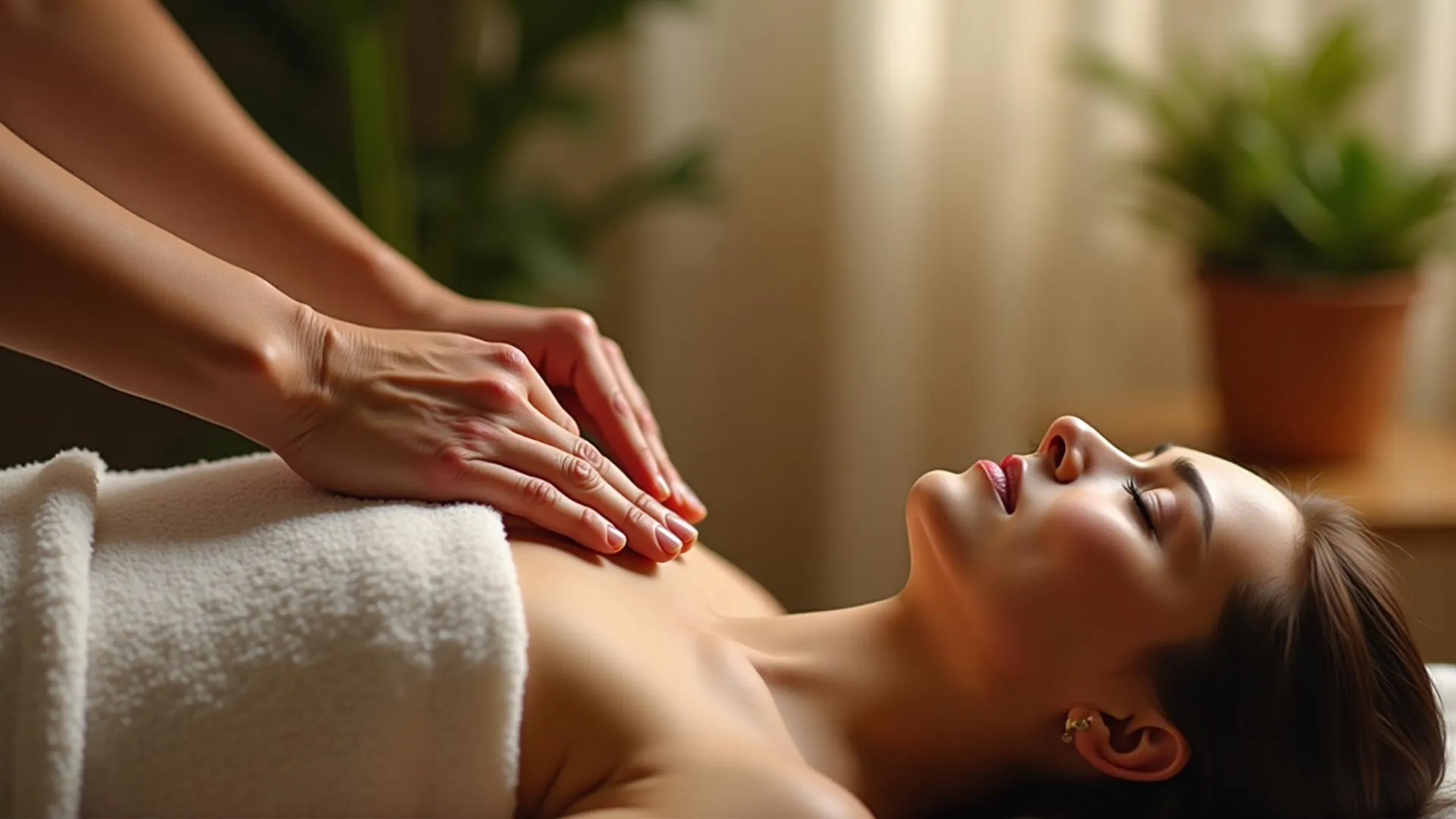
Gentle, fully clothed Reiki in Holborn for deep relaxation and stress relief, given alongside other energy-based work.
Reiki is a Japanese energy healing technique in which a practitioner places their hands lightly on or just above the body, aiming to support relaxation and a sense of balance. Sessions are quiet, fully clothed and non-invasive. At our Holborn clinic, Reiki is offered alongside other energy-based work such as chakra balancing, and people usually come wanting a calm space to unwind from stress.
Reiki is a Japanese technique in which a practitioner places their hands lightly on or near the body in a series of positions, with the stated aim of supporting relaxation and balance. It is not part of conventional medicine and has no agreed physiological mechanism, but many people find the sessions themselves calming. You remain fully clothed throughout, and a typical session lasts around 40 to 60 minutes including a short consultation beforehand.
The stillness of a Reiki session, lying quietly for an extended period, is often what people value most, regardless of view on the underlying theory.
People often book during particularly stressful periods, wanting a calm, unhurried session as part of a wider approach to managing stress.
Reiki is sometimes used alongside talking therapy, medical treatment or other complementary approaches, as an additional source of calm rather than a replacement for any of them.
Because there is no massage or manipulation involved, Reiki suits people who want a calming session without deep physical work.
Some people report feeling emotionally lighter or calmer after a session. This is a commonly reported personal experience rather than a proven clinical effect.
John Christian offers Reiki alongside his work in electro-crystal therapy and breathwork, for people who want a broader energy-based session.
A short conversation about what has brought you in, and what to expect from the session.
You lie down fully clothed on the treatment couch and get comfortable, often with a blanket available.
Your practitioner places their hands lightly on or just above a series of positions on the body. Many people feel warmth or simply notice the stillness.
A few minutes to reorient before getting up, plus a short conversation about how the session felt.
Works with the body's energy field, including Reiki and electro-crystal therapy, alongside training in neuro-linguistic programming, hypnotherapy and breathwork coaching. Sessions are gentle, fully clothed and non-invasive.
View full profileYou remain fully clothed throughout. Your practitioner's hands rest lightly on or hover just above a series of positions, usually starting near the head and moving down the body. There is no massage or deep pressure involved.
Reactions vary. Some people feel warmth or a light tingling, others simply feel very relaxed, and a number fall asleep during the session. There is no right way to experience it.
Reiki was developed in Japan in the early twentieth century and later spread internationally, developing several different lineages and styles along the way. It sits outside conventional medicine and does not have an agreed scientific explanation for how it might work.
Practitioners train through a series of levels, usually called attunements, culminating in a Reiki Master qualification for those who go on to teach. Training bodies and standards vary, which is part of why checking a practitioner's professional registration matters.
Systematic reviews of Reiki research generally find the trial evidence to be limited in quality, with small studies and inconsistent results. There is no accepted scientific mechanism by which Reiki would have an effect beyond relaxation and the general benefits of quiet, attentive touch or presence.
We are straightforward with clients about this. Reiki is offered as a relaxation-focused complementary therapy rather than a treatment for any medical condition, and we will always suggest seeing your GP for anything that needs a diagnosis or medical treatment.
Reiki is gentle, fully clothed and non-invasive, and carries very little physical risk for most people. It is not a substitute for medical or psychological care and should not delay you seeking appropriate treatment for a health concern.
Reiki is not statutorily regulated in the United Kingdom, and training standards vary between organisations. Ask your practitioner about their training and any professional body membership if this matters to you.
People arrive for very different reasons. Some are going through a demanding stretch at work and want an hour where nothing is asked of them. Some are already having counselling, acupuncture or massage and want something quieter alongside it. Others are simply curious, having heard about it from a friend, and want to try a session without committing to anything.
A smaller group come during a difficult period such as bereavement, burnout or recovery from illness, wanting calm company and stillness rather than conversation. Reiki is offered in those situations as comfort and rest, never as treatment for the underlying condition, and we will suggest counselling or your GP where that is the more appropriate route.
"Perfect. Will be back for more!"
Anna S.
"Great location in the heart of the city! I would say it's a quiet oasis in a very busy area, a place to relax after a hard day at work."
Robert D.
Sessions are held at 46 Theobalds Road, a few minutes from Holborn station. Get in touch to arrange a time.
Book Appointment