"Perfect. Will be back for more!"
Anna S.
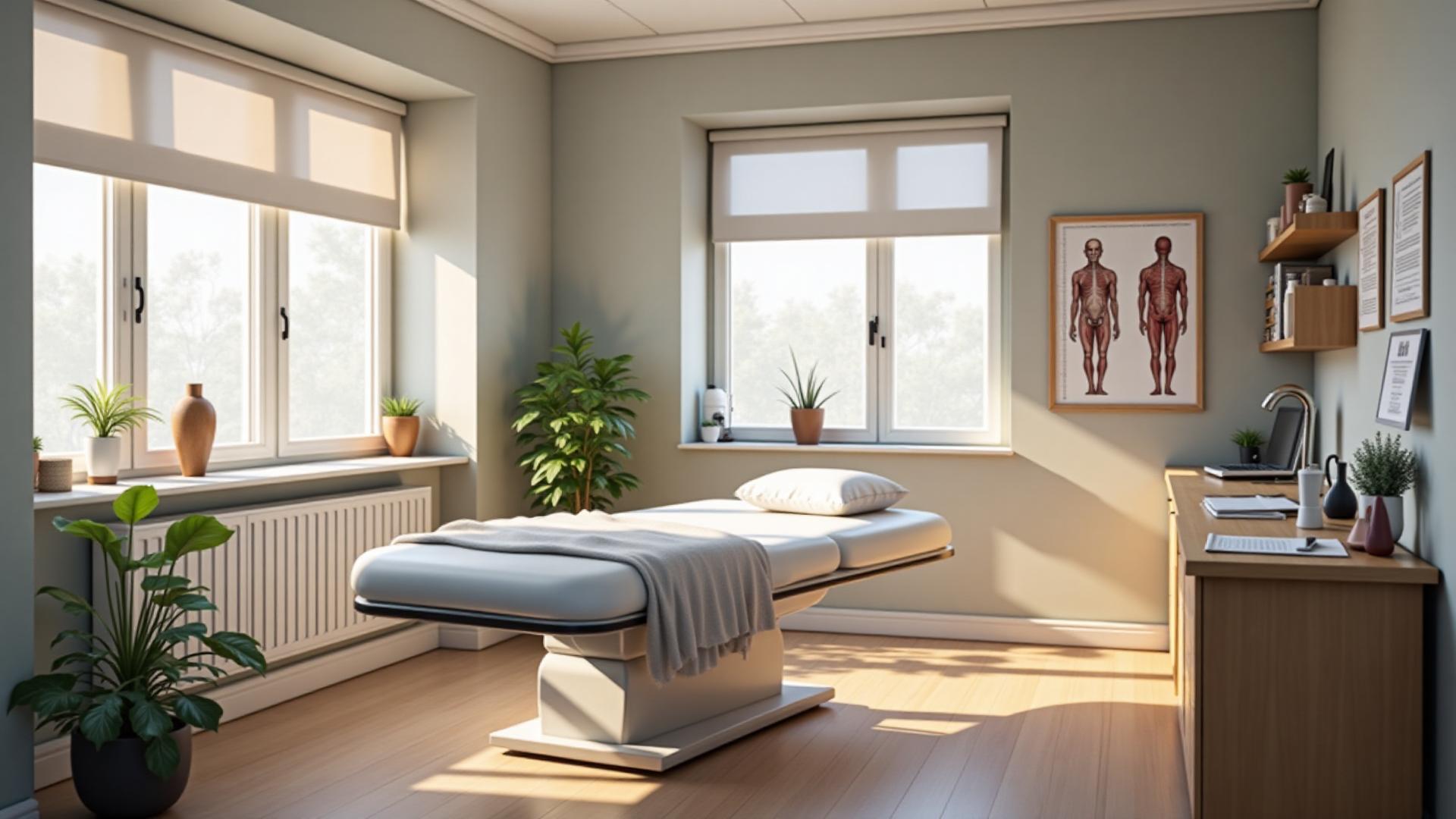
Osteopathy in Holborn with a GOsC registered osteopath, for back and neck pain, joint problems, headaches and persistent pain.
Osteopathy is a regulated healthcare profession that assesses and treats problems with muscles, joints and the way the body moves. Treatment combines examination, hands on work and practical advice about load, movement and pacing. Our Holborn osteopath is registered with the General Osteopathic Council, which is a legal requirement to use the title in the United Kingdom.
Osteopathy is a regulated manual healthcare profession focused on the muscles, joints, ligaments and connective tissue, and on how restrictions in one area affect movement elsewhere. An osteopath examines how you move, then uses techniques such as soft tissue work, stretching, joint articulation and, where appropriate, manipulation, alongside advice on exercise and daily load. In the United Kingdom osteopaths must be registered with the General Osteopathic Council, and the title is protected by law.
The most common reason people book. Treatment addresses the painful area and the stiffness above and below it that keeps feeding the problem.
Shoulders, hips, knees and ankles, including pain that has followed a change in training, work set-up or footwear.
Headaches driven by neck and upper back tension often respond to hands on treatment combined with posture and load advice.
Our osteopath has training in Acceptance and Commitment Therapy for chronic pain, which shapes how longstanding pain is approached.
Rehabilitation after a strain, return to running, and working out why the same injury keeps coming back.
Very common in Holborn. Treatment is paired with realistic changes to seating, screen height and how often you move.
Your symptoms, how they began, medical history, medication, work and activity. This is also where anything needing a GP or scan is picked up.
Watching how you stand, bend and move, with orthopaedic and neurological tests where relevant. You will usually be asked to undress to shorts and a vest, and a chaperone can be present.
A plain language account of what is going on, what treatment involves and what you can expect, so you can give informed consent.
Soft tissue work, articulation, stretching and, if agreed, manipulation, followed by exercises and advice for the weeks ahead.
GOsC registered osteopath with a Master's degree in Osteopathy, additional training through the British Medical Acupuncture Society foundation course including headache and migraine, Acceptance and Commitment Therapy for chronic pain, and sports injury management at St Mary's. A former professional dancer in the West End and on Broadway, he also teaches one to one Pilates and works with soft tissue release, myofascial release and muscle energy technique.
View full profileMost of a treatment is slow, specific hands on work: sustained pressure into tight tissue, rhythmic movement of a joint through its range, stretching, and techniques where you gently push against resistance so the muscle releases. It should not be an ordeal. Some techniques are firm, and you can ask for less at any point.
Manipulation, the technique that sometimes produces a click, is only one option among many and is never used without explaining it first and asking. It is not suitable for everyone, and treatment works perfectly well without it where it is not appropriate.
It is normal to feel a little sore or tired for a day after the first session, in the way you might after unfamiliar exercise. That usually settles within 48 hours.
A straightforward recent strain often needs two to four sessions. Longer standing problems take longer, and usually involve more work from you between appointments. You should see some change in the first two or three sessions, even if it is partial.
If nothing is shifting after a fair trial, the right answer is to say so and either change the approach or refer you on, not to keep booking. Where imaging, medication or a specialist opinion is the sensible next step, we will say that too.
Osteopathic assessment looks above and below the area that hurts. A stiff mid back changes how the neck has to turn. A hip that has lost rotation asks the low back to make up the difference. An old ankle injury quietly alters how you load the other leg. None of this means the painful area is imaginary; it means treating only that area often gives short lived relief.
In practice this is why you may be examined in places you did not expect, and why treatment sometimes starts somewhere other than the sore spot. It is also why the advice you leave with tends to be about load and movement across the week rather than a single stretch for the symptom.
Pain that has been present for months behaves differently from a fresh injury. The nervous system becomes more protective, movement shrinks, sleep suffers, and the fear of provoking it can do as much to limit daily life as the pain itself. Hands on treatment still helps, but it works best as part of a plan rather than as the plan.
Our osteopath has completed training in Acceptance and Commitment Therapy for chronic pain, which shapes how these cases are handled here. The focus shifts towards pacing, gradually widening what you are willing to do, and measuring progress by what you can get back to rather than by the pain score alone. That is a slower, more honest conversation than promising to fix it in three appointments.
Osteopathy is statutorily regulated in the United Kingdom. Only practitioners registered with the General Osteopathic Council may call themselves osteopaths, and registration requires a recognised qualification, professional indemnity insurance and continuing professional development. You can check any osteopath's registration on the GOsC register.
Osteopathic treatment is low risk. Mild soreness for a day or two is the common side effect. Tell your osteopath about osteoporosis, blood thinning medication, recent fractures, inflammatory joint disease or any cancer history, as these change which techniques are used. Anything suggesting a problem needing medical assessment will be referred to your GP.
"Perfect. Will be back for more!"
Anna S.
"Great location in the heart of the city! I would say it's a quiet oasis in a very busy area, a place to relax after a hard day at work."
Robert D.
Sessions are held at 46 Theobalds Road, a few minutes from Holborn station. Get in touch to arrange a time.
Book Appointment