"Perfect. Will be back for more!"
Anna S.
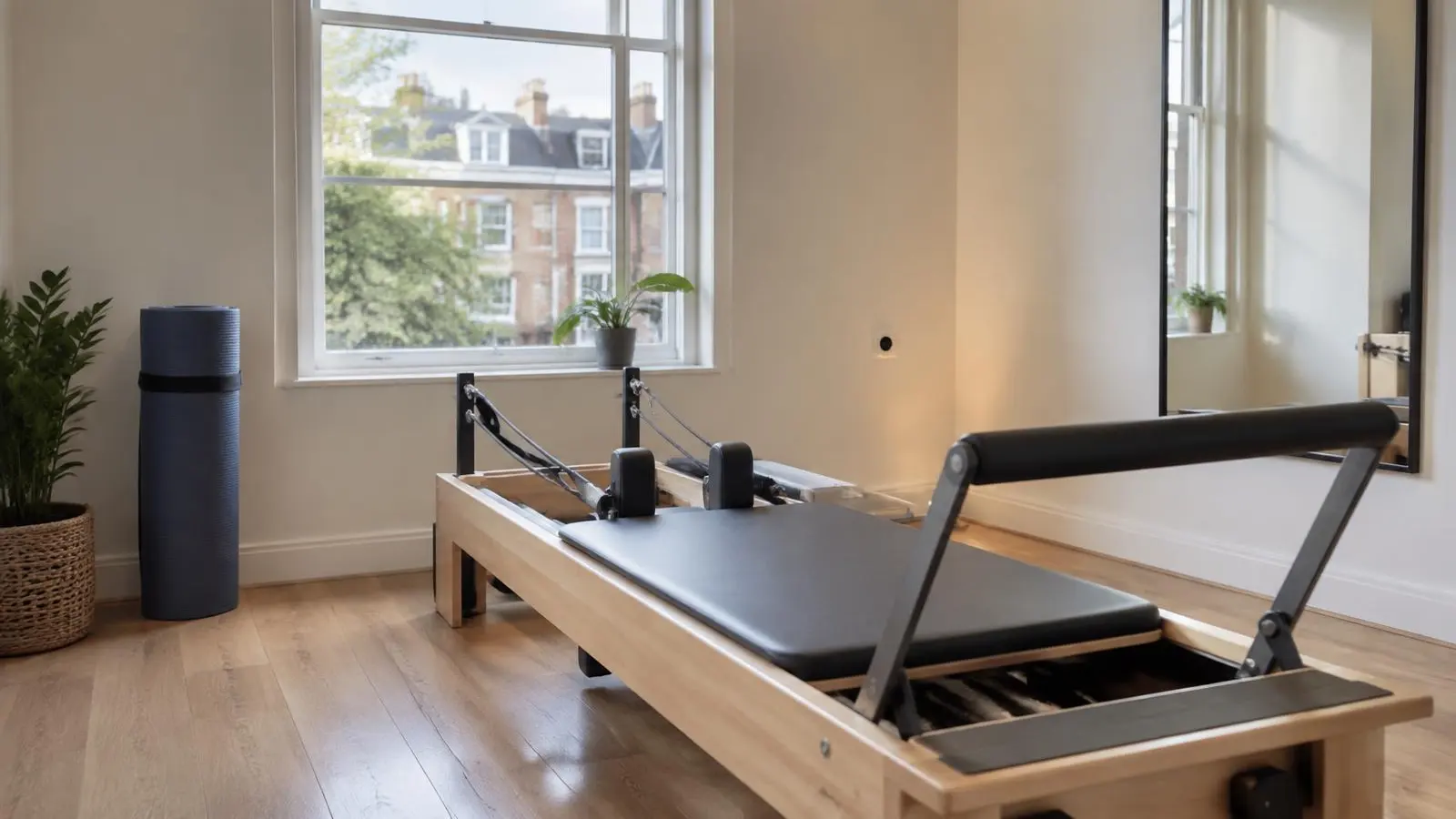
One to one Pilates in Holborn, taught by a registered osteopath and former professional dancer. No classes, no fixed programme, just sessions built around your body.
Pilates is a method of exercise that trains control, alignment and breathing rather than raw strength. We teach it one to one only, so the session can be shaped around your history, your pain and what you are trying to get back to. Many people come to us after hands on treatment, when the question has changed from settling a problem to keeping it settled.
One to one Pilates is a private session in which a teacher takes you through controlled exercises for the deep trunk, hip and shoulder muscles, correcting position and breathing as you go. At our Holborn clinic it is taught by a registered osteopath, so the exercises are chosen around your assessment rather than a class plan. A session usually lasts an hour, is taught on a mat and small equipment, and ends with a short set of exercises to continue at home.
Most people arrive with a problem that settles with treatment and then comes back. Pilates gives the trunk and hips something to do differently between episodes.
Hypermobile joints usually need control at the end of range rather than more stretching. Sessions concentrate on holding position under light load.
Long hours at a screen shorten some muscles and switch others off. The work is practical: how you sit, how you breathe and how the shoulder blades move.
Pilates suits the stage after pain has settled, when load needs to be rebuilt gradually before you go back to running, lifting or dancing.
Exercises are adapted for pregnancy and for the months after birth, with positions and abdominal work chosen to suit the stage you are at.
You leave with a short home set, usually four or five exercises, rather than a routine that needs an hour you do not have.
History, current pain, previous injuries and what you want to get back to, then a look at how you stand, bend and move.
The starting point of the method: rib and diaphragm breathing, pelvis position and how to find the deep trunk muscles without gripping.
Mat work and small equipment, with each exercise adjusted for range, load and speed. Difficulty is set by control, not by repetitions.
A short written set to do between sessions, prioritised so you know which two exercises matter most.
GOsC registered osteopath with a Masters degree in Osteopathy, and a former professional dancer in the West End and on Broadway. Brian teaches Pilates one to one only, usually for people who want to build strength and control between osteopathy treatments, and he works with adults, older adults, pregnant women and athletes.
View full profileIn a class, the teacher sets the exercise and you fit yourself to it. In a private session it works the other way around. If your left hip will not let you sit square, or an old ankle injury changes how you load a lunge, the exercise changes.
It also means the session can be planned alongside treatment. Brian is an osteopath first, so what he finds on the table informs what you practise, and what you report back from practice informs the next treatment.
Wear clothes you can move in. You will spend much of the hour on a mat, with some standing and seated work and small equipment such as a band, ball or light weights. Nothing is fast and nothing should hurt.
The common surprise is how small the movements are at first. Precision is the point of the method: a correctly placed pelvis with three repetitions is worth more than twenty repetitions of something approximate.
For persistent low back pain, NICE recommends exercise as a first line option and does not favour one type of exercise over another, which includes Pilates based programmes. Reviews of Pilates for low back pain generally find modest short term improvements in pain and function compared with doing nothing, and little difference when compared with other forms of active exercise.
Read honestly, that means Pilates is a reasonable and well tolerated way to exercise rather than a uniquely effective one. Its practical advantage is that people tend to keep doing it, because it is graded, low load and supervised closely.
The first two or three sessions are mostly about learning where things are: how to breathe into the ribs, how to move the leg without the pelvis following it, how to switch the deep trunk on at a low level and keep it there. It can feel underwhelming and it is the part that everything else rests on.
From there, exercises get longer levers, less support and more range. Progress shows up outside the room first, usually as fewer flare ups, a back that copes with a long day, or being able to carry shopping and sit through a meeting without paying for it afterwards.
Sessions are usually weekly at the start, then spaced out as the home set becomes reliable. Plenty of people end up coming monthly to have the programme checked and progressed rather than continuing weekly forever.
Tell us at booking about pregnancy, recent surgery, fractures, osteoporosis, uncontrolled blood pressure or any heart condition, so exercises can be adapted or postponed. New, severe or unexplained pain, numbness, weakness, or bladder or bowel changes belong with your GP or A and E first, not with an exercise session.
Pilates here is supportive care alongside medical treatment, not a replacement for it. If your session suggests something that needs medical assessment, we will say so.
"Perfect. Will be back for more!"
Anna S.
"Great location in the heart of the city! I would say it's a quiet oasis in a very busy area, a place to relax after a hard day at work."
Robert D.
Sessions are held at 46 Theobalds Road, a few minutes from Holborn station. Get in touch to arrange a time.
Book Appointment