"Perfect. Will be back for more!"
Anna S.
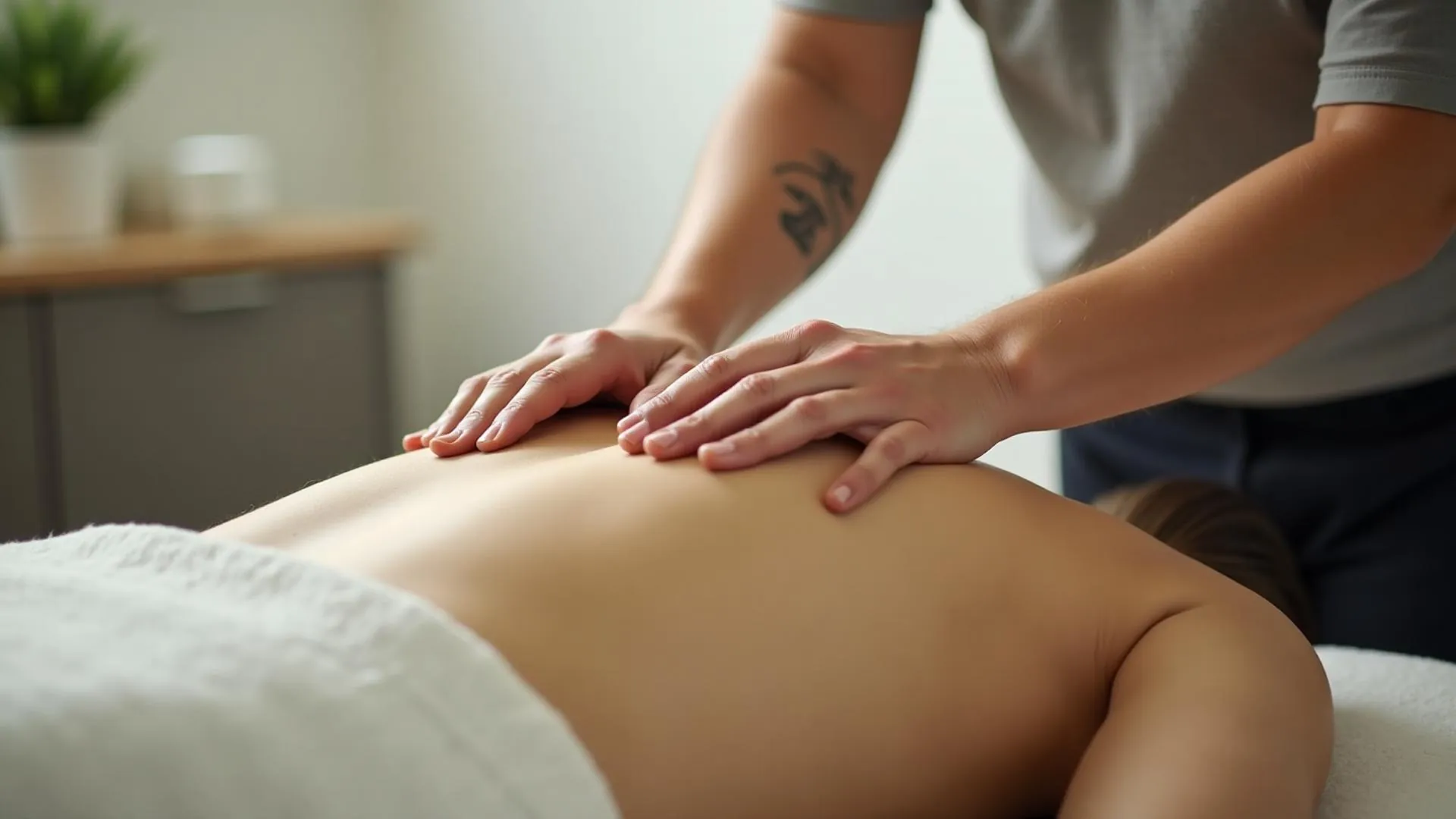
Slow, sustained hands-on work to ease fascial restriction and long-held tension, from experienced practitioners in Holborn.
Myofascial release works on fascia, the connective tissue that surrounds and connects muscles throughout the body, using slow, sustained pressure rather than the quicker strokes of a general massage. It is used for widespread tension and restriction that feels like it pulls across an area rather than sitting in one specific knot, and our Holborn practitioners often combine it with other bodywork depending on what you need.
Myofascial release is a hands-on technique that applies slow, sustained pressure to fascia, the connective tissue surrounding muscles, aiming to ease restriction and improve how tissue moves. Unlike a general massage, which uses shorter strokes, myofascial release holds pressure over an area for several minutes at a time, waiting for the tissue to soften rather than working it quickly. It is used for chronic tension, postural restriction and the after-effects of injury or surgery, once any wound has fully healed.
Restriction that feels like it pulls across a broad area rather than sitting in one spot is what myofascial release is aimed at.
Longstanding posture, often from years at a desk or repetitive movement, can leave fascia feeling tight in a way that a quick massage does not fully reach.
Once a surgical or injury scar has fully healed, some practitioners use myofascial techniques to work on tissue that still feels restricted around it.
Reducing fascial restriction is used to support easier movement, often alongside stretching or exercise rather than instead of it.
Some people with longstanding pain, including conditions like fibromyalgia, find the slow, sustained pressure more comfortable than firmer techniques.
Myofascial release is often used alongside osteopathy, acupuncture or deep tissue massage rather than as a stand-alone therapy.
Discussion of pain patterns, injury history and any postural concerns, and what has and has not helped before.
Your practitioner checks for areas of restriction and tests movement to decide where to focus the session.
Slow, sustained pressure held over each area, often for several minutes at a time, allowing the tissue to soften gradually.
Simple self-release or stretching techniques to continue at home, and guidance on what to expect over the next day or two.
BAcC registered acupuncturist and RCHM registered herbal medicine practitioner with a graduate diploma in therapeutic bodywork, combining myofascial and neuromuscular therapy with Chinese medicine for complex, multi-system problems.
View full profileHCPC registered advanced physiotherapist and structural integration specialist with close to ten years in physiotherapy and twenty years in sports and remedial massage, working with musculoskeletal and persistent pain.
View full profileLondon School of Sports Massage graduate with more than 16 years of experience, working with myofascial and soft tissue techniques alongside sports and deep tissue massage.
View full profileGOsC registered osteopath who draws on myofascial release, soft tissue release and muscle energy technique within osteopathic treatment for persistent pain, headaches and hypermobility.
View full profilePressure builds slowly and is held rather than moved quickly, often for three to five minutes over a single area before your practitioner moves on. It should feel like a strong, steady stretch rather than a sharp pain, and many people describe a sensation of gradual release or warmth as the tissue softens.
Sessions can feel slower and quieter than other bodywork, and some people find them unexpectedly relaxing despite the sustained pressure involved.
Research on myofascial release is more limited than for general massage, and findings are mixed on how much of the benefit comes from changes to fascia itself versus the general effects of hands-on treatment, relaxation and attention. There is some evidence supporting short-term improvements in flexibility and reported pain, particularly for chronic musculoskeletal complaints.
We are honest that the underlying mechanism is debated among researchers and practitioners. What matters in practice is whether you notice a real difference after a fair trial of a few sessions, and we would rather adjust the approach than keep going without change.
Myofascial release is not a statutorily regulated therapy in the UK, so look for practitioners trained in recognised bodywork qualifications and registered with a body relevant to their core profession, such as the HCPC for physiotherapists or the GOsC for osteopaths, as our practitioners are.
Tell your practitioner about any bleeding disorders, blood thinning medication, recent surgery, fractures or acute inflammation, since sustained pressure is not appropriate everywhere. Anything new, severe or unexplained should be assessed by a GP first.
Fascia is the connective tissue that wraps muscles, bones and organs and links them to each other. It is continuous, so tissue in the calf is connected, through a chain of structures, to tissue at the back of the thigh, the low back and beyond. That continuity is the reason practitioners look beyond the painful area, and the reason a restriction in one place can plausibly limit movement somewhere else.
How much of that plays out in practice is genuinely debated. Fascia is strong and not easily deformed by hand pressure alone, so the effects people notice may owe as much to changes in how the nervous system regulates tension as to any structural change in the tissue itself. Either way, the practical test is the same: does the area move more freely afterwards, and does the change hold.
Change is usually gradual rather than dramatic. After the first session people often report feeling looser and slightly spaced out for the rest of the day, with a little tenderness the next morning. Two or three sessions in, the more useful signal is whether daily movements have changed: turning to reverse the car, reaching overhead, getting out of a chair after a long meeting.
Sessions are typically weekly at first, then spaced out. Movement homework matters, because tissue that has been freed up needs to be used in its new range to keep it. If four to six sessions have produced nothing you can point to, we would rather say so and suggest a different route than keep booking appointments.
"Perfect. Will be back for more!"
Anna S.
"Great location in the heart of the city! I would say it's a quiet oasis in a very busy area, a place to relax after a hard day at work."
Robert D.
Sessions are held at 46 Theobalds Road, a few minutes from Holborn station. Get in touch to arrange a time.
Book Appointment