"Perfect. Will be back for more!"
Anna S.
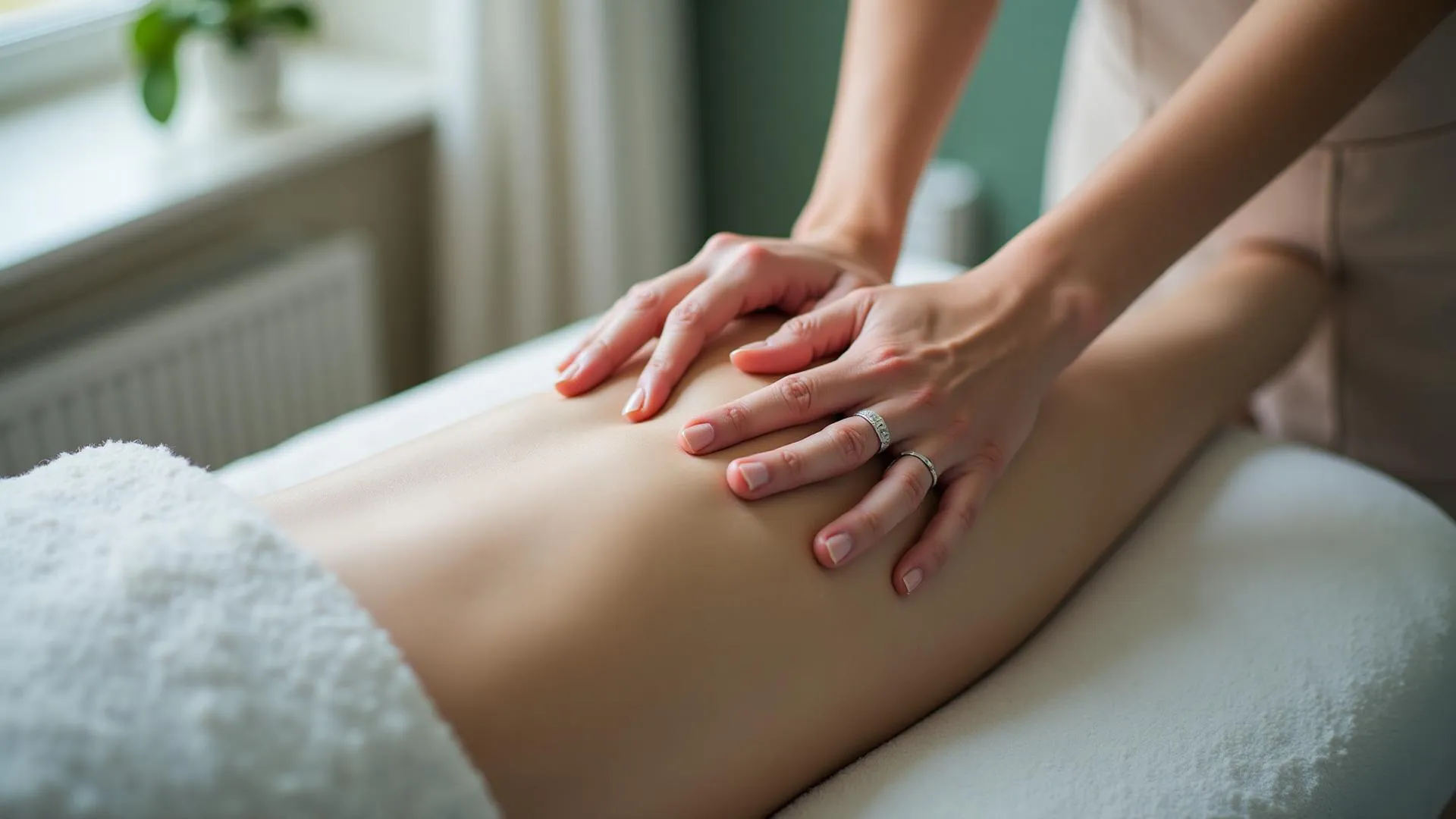
Precise soft tissue techniques combining pressure and active movement to free adhesions and reduce muscular pain, at our Holborn clinic.
Soft tissue release, often shortened to STR, combines direct pressure held on a specific point with active movement of the surrounding joint, sometimes called a pin-and-stretch technique. Rather than working on tissue while you lie still, the therapist pins an area and asks you to move it, which targets a specific adhesion more precisely than a general massage stroke.
Soft tissue release is a manual therapy technique in which the practitioner applies direct pressure to a specific point in muscle or connective tissue while the client actively or passively moves the surrounding joint. This pin-and-stretch approach is used to target a precise adhesion or restriction, more directly than a general massage stroke can. It is commonly used for sports injuries, muscle strains and repetitive strain problems, and sessions usually combine it with other soft tissue techniques such as massage or stretching.
Muscle strains and tendon problems related to activity are a common reason for booking STR, once any acute stage has settled.
Because pressure is combined with movement, STR can reach a specific adhesion more directly than a broader massage stroke.
Releasing a specific restriction can make a noticeable difference to how a joint or muscle group moves, particularly with follow-up stretching.
Repetitive movement problems, such as those from certain sports or repeated work tasks, often respond to STR aimed at the specific tissue involved.
Once fully healed, scar tissue from injury can sometimes be treated with STR to reduce how much it restricts surrounding movement.
STR is often used within a wider sports massage or physiotherapy session rather than as a stand-alone treatment throughout.
Discussion of injury history, movement patterns and what triggers your pain or restriction.
Your therapist tests range of movement and locates the specific adhesion or trigger point to target.
Direct pressure is applied to the identified point while you actively move the area, releasing the adhesion through combined pressure and stretch.
Stretches and simple exercises to support the release, and advice on returning to training or activity.
Remedial soft tissue therapist since 2007 with a BTEC Level 5 Diploma in Soft Tissue Therapy and an SNT Level 5 Clinical Sport and Remedial Massage Diploma, with a longstanding interest in how the body heals from injury.
View full profileLondon School of Sports Massage graduate with more than 16 years of experience, drawing on soft tissue release alongside sports and deep tissue massage, with particular knowledge of running injuries.
View full profileGOsC registered osteopath who uses soft tissue release, myofascial release and muscle energy technique within osteopathic treatment for persistent pain and movement restriction.
View full profileYour therapist locates a specific tight or restricted point and applies direct pressure with a thumb, knuckle or elbow, holding it in place. You are then asked to actively move the joint, or your therapist moves it for you, lengthening the tissue past the point being held. This combination of pin and stretch is thought to release adhesions more specifically than a moving massage stroke alone.
It can feel firm and occasionally uncomfortable as the point is pressed, but it should not be sharply painful, and it is usually done in short, repeated passes rather than one long hold.
Soft tissue release is used widely in sports therapy and has some supporting evidence for short-term improvements in range of movement and reduced muscle tightness, particularly when combined with stretching. As with other manual therapies, well-controlled research is limited, and it is best considered one useful technique within a broader treatment or training plan rather than a stand-alone cure.
We will tell you honestly if a problem sounds like it needs imaging or a medical assessment rather than repeated soft tissue work, particularly if there has been a specific traumatic injury.
Soft tissue release is not a statutorily regulated therapy in the UK, so look for practitioners with recognised sports or remedial massage qualifications and membership of a body such as the CNHC or the Sports Massage Association, which our practitioners hold. Tell your therapist about any recent fracture, acute injury, bleeding disorder or blood thinning medication before treatment.
A fresh, significant injury, particularly with swelling, deformity or inability to bear weight, should be assessed by a doctor or physiotherapist before soft tissue work is considered.
There are two ways to run the technique. In the active version you perform the movement yourself while the therapist holds the point, which keeps you in control of speed and range and means your nervous system is involved in the change rather than having it done to you. In the passive version the therapist moves the limb for you, which is used when the area is too sore or too awkward to move well on your own.
Most sessions use both. Early on, with a guarded or painful area, passive work is often more comfortable. As things settle, moving under your own steam tends to hold the improvement better, and it leads naturally into the loaded exercise that stops the problem returning.
Expect the treated area to feel looser and sometimes slightly tender, in the way a muscle feels the day after unfamiliar work. That usually settles within a day or two. Keep moving gently, drink normally, and avoid a hard session on the treated area for about 24 hours.
The stretches you are given afterwards matter more than they might seem. A release creates a window in which the tissue moves more freely, and the stretching and loading you do in the following days is what persuades it to stay that way.
"Perfect. Will be back for more!"
Anna S.
"Great location in the heart of the city! I would say it's a quiet oasis in a very busy area, a place to relax after a hard day at work."
Robert D.
Sessions are held at 46 Theobalds Road, a few minutes from Holborn station. Get in touch to arrange a time.
Book Appointment