"Perfect. Will be back for more!"
Anna S.
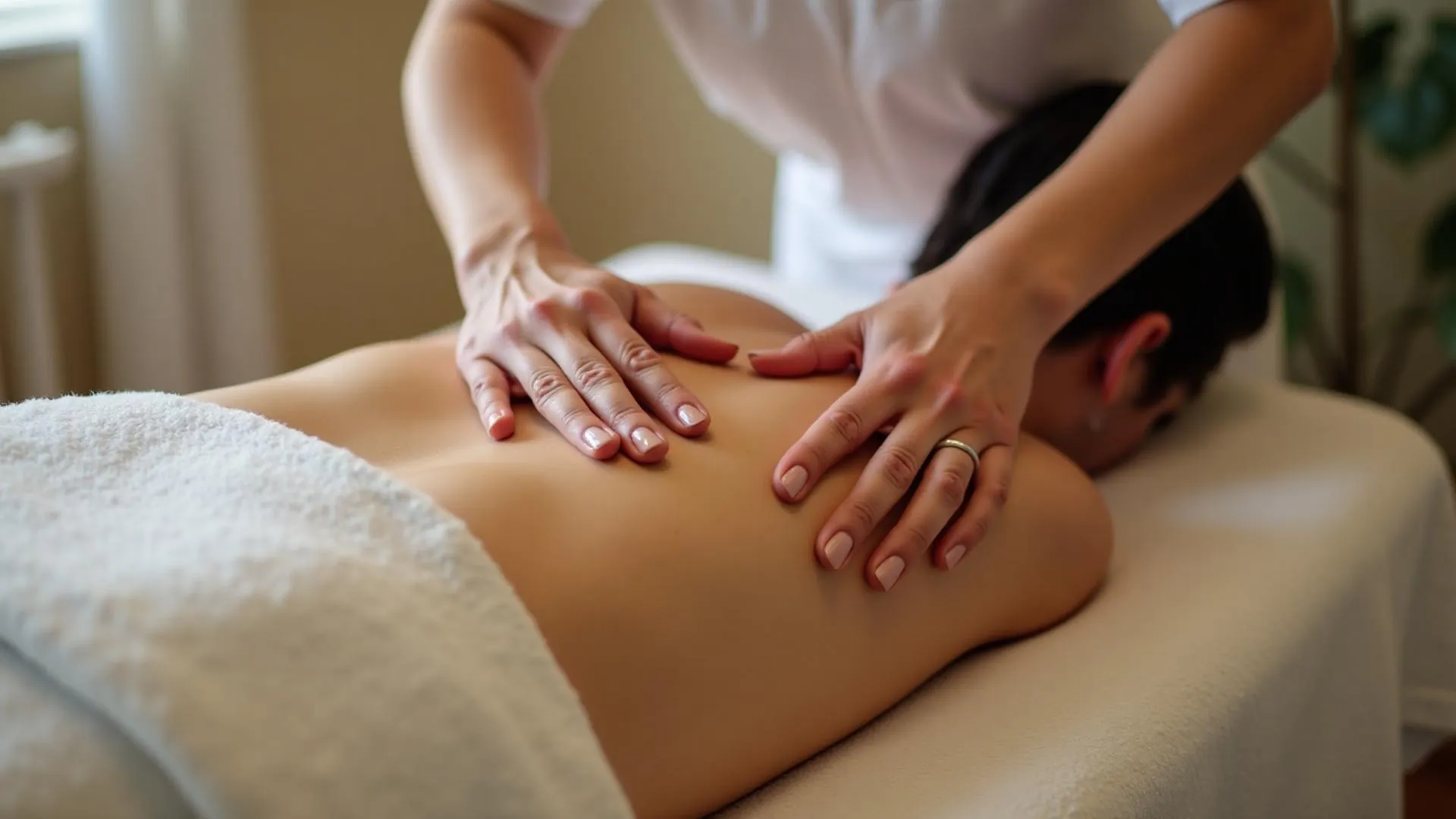
Firm, focused massage for chronic tension, stubborn knots and sports recovery, from qualified therapists in Holborn.
Deep tissue massage uses slower, firmer strokes and sustained pressure to reach deeper layers of muscle and the surrounding connective tissue, rather than the lighter strokes used in a general relaxation massage. It suits well-localised, longstanding tightness more than a general sense of stress, and sessions at our Holborn clinic are built around the areas that are actually giving you trouble.
Deep tissue massage is a firmer style of massage that uses slow strokes and sustained pressure, often with the forearm or elbow, to work on deeper muscle layers and chronic areas of tightness. It differs from general massage mainly in pressure and pace rather than technique, and it is usually aimed at a specific area rather than the whole body. Expect noticeable pressure and some tenderness during the session, and possibly mild soreness for a day or two afterwards, similar to how a muscle feels after unfamiliar exercise.
Longstanding tightness that has not shifted with a lighter massage is the main reason people book deep tissue work.
Firm, sustained pressure over a specific tight band or trigger point is more likely to change it than a lighter passing stroke.
Tightness that builds up from sitting, driving or repeated movement at work often sits in the same few areas, which deep tissue work can target directly.
Some clients use it after a period of heavy training or physical work, though very fresh or acute injuries are usually better suited to a gentler approach first.
Firmer, sustained work is sometimes used around old scar tissue or adhesions, once any wound has fully healed.
Reducing tightness in a specific muscle group can make a stiff shoulder, hip or back easier to move, particularly alongside stretching.
Discussion of where the tightness or pain is, how long it has been there, and your pressure preference.
Your therapist feels for tight bands, knots and restricted movement to plan which areas need the most time.
Firm, sustained pressure using forearms, elbows and thumbs on the agreed areas, working gradually into deeper tissue.
Advice on hydration, gentle stretching, and what mild soreness is normal versus what should be checked.
Qualified professional remedial soft tissue therapist since 2007, holding a BTEC Level 5 Diploma in Soft Tissue Therapy, an SNT Level 5 Clinical Sport and Remedial Massage Diploma, and ITEC qualifications.
View full profileMassage therapist trained at the London School of Sports Massage, qualified in 2005, with a particular interest in running injuries drawn from his own experience racing from 5k to marathon distance.
View full profileMassage therapist who tailors pressure and technique to the individual, aiming to help clients live a pain-free, healthy life regardless of age or physical condition.
View full profileAcupuncturist with over a decade of clinical experience who also treats musculoskeletal and joint conditions, working alongside deep tissue and acupuncture where the two complement each other.
View full profileThe pace is slower than a general massage, and pressure builds gradually rather than starting firm. Your therapist works into resistance and waits for the tissue to soften before going further, rather than forcing through it. Communication matters here more than in a lighter massage: firm pressure is intended, but sharp or breath-holding pain is a sign to ease off.
Sessions are usually focused on one or two problem areas rather than a full body treatment, which is why 30 or 45 minute appointments are common alongside the standard hour.
Deep tissue and other firm massage techniques have reasonable evidence for short-term reduction in muscle tenderness and perceived tightness, and for a temporary increase in local range of movement. Evidence that the effects last for weeks without repeated sessions, or that deep tissue changes underlying tissue structure in a lasting way, is weaker than the marketing around it sometimes suggests.
In practice, most people need a short course of sessions rather than one visit, and pairing treatment with stretching or exercise tends to make the benefit last longer than treatment on its own.
Mild soreness for 24 to 48 hours afterwards is common and usually settles with water and gentle movement. Tell your therapist about blood thinning medication, bleeding disorders, recent injury, varicose veins, osteoporosis or any area that is acutely inflamed, since deep pressure is not appropriate everywhere.
Massage therapy is not statutorily regulated in the UK, so look for membership of a body such as the CNHC or the Sports Massage Association, which our therapists hold. New, severe or unexplained pain should be assessed by a GP or physiotherapist before booking a deep tissue session.
Deeper is not automatically better. The useful range is pressure you can breathe through: firm enough that the area clearly registers it, light enough that your shoulders stay down and your breathing stays even. If you find yourself gripping the couch or holding your breath, the muscle underneath is bracing too, which works against the treatment.
Say something early rather than enduring it. Pressure is adjusted constantly through a session, and asking for less in one area and more in another is expected. A good session usually involves several small corrections rather than one setting held throughout.
The hours after a session matter. Drink normally, keep moving gently, and avoid a hard training session on the treated area for about a day. Heat on the area that evening suits most people, though anything freshly inflamed prefers to be left alone.
What decides whether the improvement holds for a week or a month is usually what changes between appointments: a couple of specific stretches, a short walk in the middle of the working day, a chair or screen at the right height, and some strength work for the area that keeps tightening. Massage buys the window; the habits keep it open.
"Perfect. Will be back for more!"
Anna S.
"Great location in the heart of the city! I would say it's a quiet oasis in a very busy area, a place to relax after a hard day at work."
Robert D.
Sessions are held at 46 Theobalds Road, a few minutes from Holborn station. Get in touch to arrange a time.
Book Appointment