"Perfect. Will be back for more!"
Anna S.
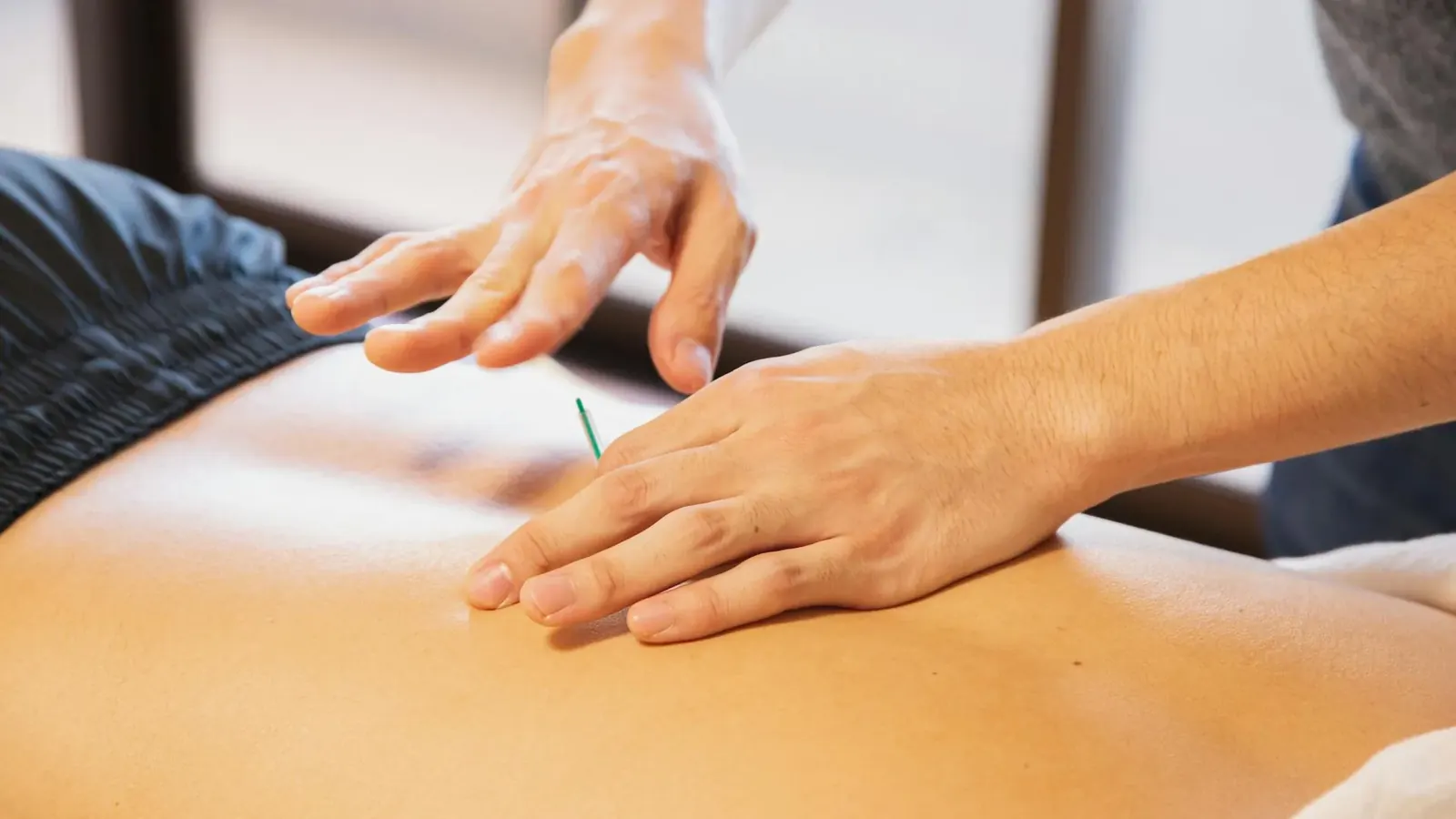
Acupuncture in Holborn with registered practitioners, used for pain, headaches, stress, sleep, women's health and fertility wellbeing.
Acupuncture uses very fine single use needles at specific points on the body. It comes from traditional Chinese medicine, and it is now also used within the NHS for some types of persistent pain and headache. Our Holborn clinic has several registered acupuncturists working in different traditions, so you can be matched to the practitioner whose approach suits what you have come with.
Acupuncture is a treatment in which very fine sterile needles are inserted a few millimetres into the skin at selected points, then left in place for around 20 to 30 minutes. It comes from traditional Chinese medicine and is used in the United Kingdom for persistent pain, headaches and migraine, stress and sleep, and as supportive care in women's health. At our Holborn clinic a first appointment runs for about an hour, including a full health history, and needling itself is usually felt as a dull ache rather than a sharp pain.
Back, neck, shoulder and joint pain are the most common reasons people book. NICE lists acupuncture as an option to consider for chronic primary pain.
Courses of acupuncture are used to reduce how often tension type headache and migraine occur, rather than to stop an attack once it has started.
Many people notice the sessions themselves are deeply settling, and report sleeping better in the nights afterwards. This is what clients tell us rather than a proven effect.
Period pain, irregular cycles and menopausal symptoms are frequent reasons for coming. Several of our practitioners work in this area regularly.
Used alongside fertility treatment, not instead of it. One of our acupuncturists is a member of the London Acupuncture Childbirth Team.
Bloating, irregular digestion and IBS type symptoms are often treated alongside dietary advice, with anything unexplained sent to a GP first.
A detailed conversation covering your main complaint, sleep, digestion, energy, cycle if relevant, medication and medical history.
Pulse and tongue observation, and palpation of the area concerned, used to decide which points to treat.
Fine single use needles are inserted, usually between six and a dozen. Most people rest quietly while they are in place, and many doze.
What your practitioner found, what to expect over the next few days, and how many sessions are worth trying before you review.
BAcC registered acupuncturist and RCHM registered practitioner of Chinese herbal medicine, with a BSc in Acupuncture and Chinese Medicine from the University of Westminster and a member of the British Medical Acupuncture Society. He also works as an ISRM registered sport and remedial therapist, which shapes how he treats musculoskeletal pain.
View full profileBAcC registered acupuncturist with a BA (Hons) in Traditional Acupuncture, practising in the classical five element tradition of J R Worsley. His work tends to suit people whose physical symptoms sit alongside a long period of stress or low mood.
View full profileLicentiate in Acupuncture and a classical five element practitioner, member of the Association of Five-Element Acupuncturists and the Complementary Therapists Association, and registered with the Acupuncture Regulatory Authority. Jamila offers sessions on a sliding scale to keep treatment accessible.
View full profileRegistered acupuncturist and member of the London Acupuncture Childbirth Team, with over ten years of clinical experience and a particular focus on fertility, IVF support and pregnancy.
View full profileHCPC registered advanced physiotherapist and member of the Chartered Society of Physiotherapy, with university accredited acupuncture training. She uses needling within physiotherapy for musculoskeletal and persistent pain.
View full profileAcupuncturist registered with the Chinese Medical Institute and Register, trained in both Chinese and Tibetan traditions, and also a counsellor and sports massage therapist, so treatment often combines needling with talking or hands on work.
View full profileAcupuncture needles are about the width of a hair and nothing like the hollow needles used for injections. Insertion is usually not felt at all. What people do notice, a moment later, is a dull, heavy or spreading sensation at the point, which fades within seconds. Practitioners call this the arrival of qi. It should be tolerable, and you should say so if it is not, because the needle can be adjusted or removed.
All needles are sterile, single use and disposed of after the appointment. You will normally lie down, covered, with only the areas being treated exposed. Points are often chosen away from the painful area, on the lower legs, forearms or hands, which surprises people the first time.
Traditional Chinese acupuncture treats patterns rather than a named condition, which is why the first appointment asks about sleep, digestion, temperature and mood as well as the problem you booked for. Classical five element acupuncture, practised here by Nicholas and Jamila, goes further in that direction, working with the constitutional element that is thought to sit under recurring symptoms.
Western or medical acupuncture, used by Brian and Melissa within osteopathy and physiotherapy, takes a more anatomical view and needles trigger points and segments related to the tissue involved. Neither style is better than the other. They suit different people and different problems, and we will suggest a practitioner rather than leaving you to guess.
NICE guidance on chronic pain (NG193) lists a course of acupuncture as an option to consider for chronic primary pain in adults, where it is delivered within a set number of sessions. NICE guidance on headaches (NG150) recommends considering a course of up to ten sessions over five to eight weeks for the prevention of chronic tension type headache and for migraine prophylaxis.
For many other uses the evidence is weaker or mixed, and honest researchers disagree about how much of the benefit is specific to needling. We will tell you when the evidence for your particular problem is thin, and we would rather you stopped after a fair trial of four to six sessions than kept booking without improvement.
Acupuncture from a trained practitioner has a good safety record. The common side effects are minor: a small bruise, a little bleeding at a point, brief light headedness, or feeling tired for a few hours afterwards. Tell your practitioner if you are pregnant, taking anticoagulants, have a bleeding disorder, a pacemaker, or a lymphoedema risk in an arm or leg, because point selection changes.
Acupuncture is not statutorily regulated in the United Kingdom. The standard to look for is registration with a professional body such as the British Acupuncture Council, and our practitioners hold registration with the BAcC, the ARA, CMIR or an equivalent body. Anything new, severe or unexplained should be seen by your GP first.
"Perfect. Will be back for more!"
Anna S.
"Great location in the heart of the city! I would say it's a quiet oasis in a very busy area, a place to relax after a hard day at work."
Robert D.
Sessions are held at 46 Theobalds Road, a few minutes from Holborn station. Get in touch to arrange a time.
Book Appointment