"Perfect. Will be back for more!"
Anna S.
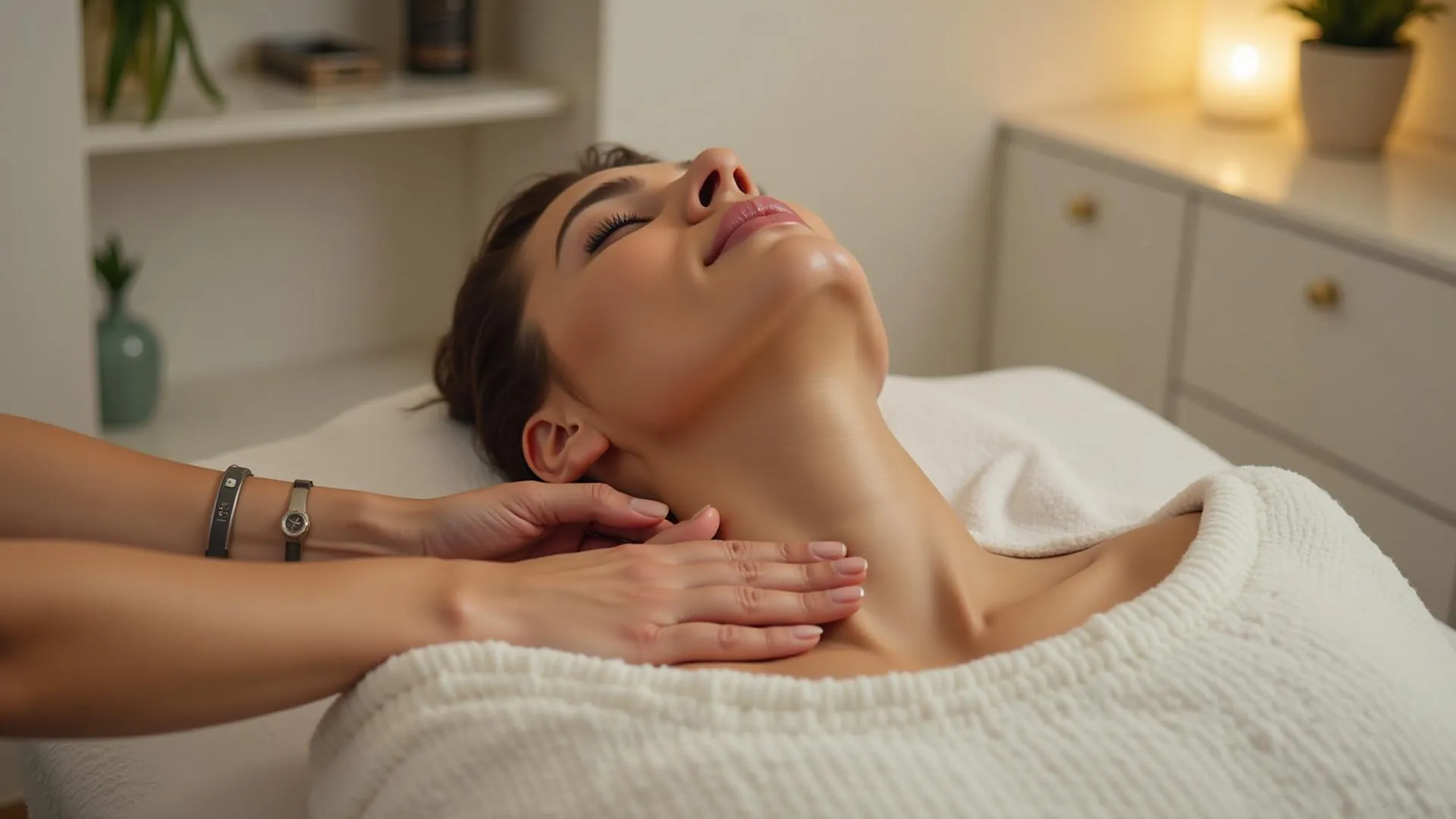
Acupressure and tui na in Holborn for tight necks, aching backs and tension that keeps returning, given by registered practitioners who also work with acupuncture and manual therapy.
Acupressure applies firm, sustained pressure with the thumbs, fingers, palms or elbows to the same points an acupuncturist would needle. It comes from Chinese medicine, where the hands-on form is known as tui na, and it suits people who want the framework of acupuncture without needles, or who want manual work that follows points rather than simply working a whole muscle.
Acupressure is a hands-on therapy from Chinese medicine in which the practitioner presses specific points along the body with thumbs, fingers, palms or elbows rather than inserting needles. Sessions are given through loose clothing on a treatment couch, usually last around an hour, and are most often used for neck, shoulder and back tension, headaches linked to muscular tightness, and general stress. At our Holborn clinic it is given by practitioners who are also trained in acupuncture and manual therapy, so the two are often combined.
The most common reason people book. Sustained pressure into the upper trapezius and around the shoulder blade suits desk-bound tightness well.
Work along the muscles either side of the spine, combined with movement, for stiffness that builds through the working week.
For people who want a Chinese medicine approach but would rather not be needled, or who are needle phobic.
Points around the neck, base of the skull and hands are commonly used where headaches follow muscular tightness rather than another cause.
Most people find the pace and the sustained contact settling, and many book it as much for that as for a specific ache.
Your practitioner can show you one or two points to press at your desk between appointments.
A history of the problem, your general health, sleep and work pattern, and a check for anything that would make treatment unsuitable.
Watching how you move, and feeling where the tissue is tight or tender, to decide which points and areas to work.
Firm pressure applied through clothing with thumbs, fingers, palms or elbows, held and released, often with stretching and joint movement.
A point or two you can use yourself, and practical advice on desk set-up, movement breaks or stretching where relevant.
Acupuncturist and myofascial therapist whose training includes tui na, studied in Chengdu, alongside acupuncture and Chinese herbal medicine.
View full profileOsteopath who draws on acupressure alongside soft tissue release, myofascial release and muscle energy technique within treatment.
View full profileTui na is the hands-on branch of Chinese medicine, sitting alongside acupuncture and herbal medicine. The name describes two of its basic actions, pushing and grasping, and the work includes point pressure, rolling, kneading, stretching and passive movement of joints. Acupressure is the point-pressure element of that tradition, and in practice the two words are often used interchangeably in the United Kingdom.
What distinguishes it from a general massage is the reasoning. The practitioner is working to a pattern and choosing points for a purpose, rather than simply working over whatever feels tight. That is also why the same practitioners tend to offer acupuncture: the framework behind the two is the same, and only the tool differs.
You stay clothed, so wear something loose that allows your arms, legs and back to be reached comfortably. Treatment is given on a couch, and you may be asked to turn over partway through, or to sit up for work around the neck and shoulders.
Pressure is firm and builds gradually rather than being applied suddenly. Points that are involved often feel distinctly tender, a dull ache rather than a sharp pain, and that sensation usually eases while the pressure is held. Nothing should be more than strongly uncomfortable, and saying so at the time is expected rather than a nuisance.
Trials of acupressure are generally small and of mixed quality, and blinding is difficult with any hands-on treatment. Reviews report short term reductions in reported pain for conditions such as low back pain and period pain, and some findings for nausea, while noting that the evidence is not strong enough to draw firm conclusions.
We offer acupressure as supportive care for muscular tension and stress alongside your usual healthcare, not as a treatment for disease. If something you describe would be better assessed by your GP, we will say so.
"Perfect. Will be back for more!"
Anna S.
"Great location in the heart of the city! I would say it's a quiet oasis in a very busy area, a place to relax after a hard day at work."
Robert D.
Sessions are held at 46 Theobalds Road, a few minutes from Holborn station. Get in touch to arrange a time.
Book Appointment