"Perfect. Will be back for more!"
Anna S.
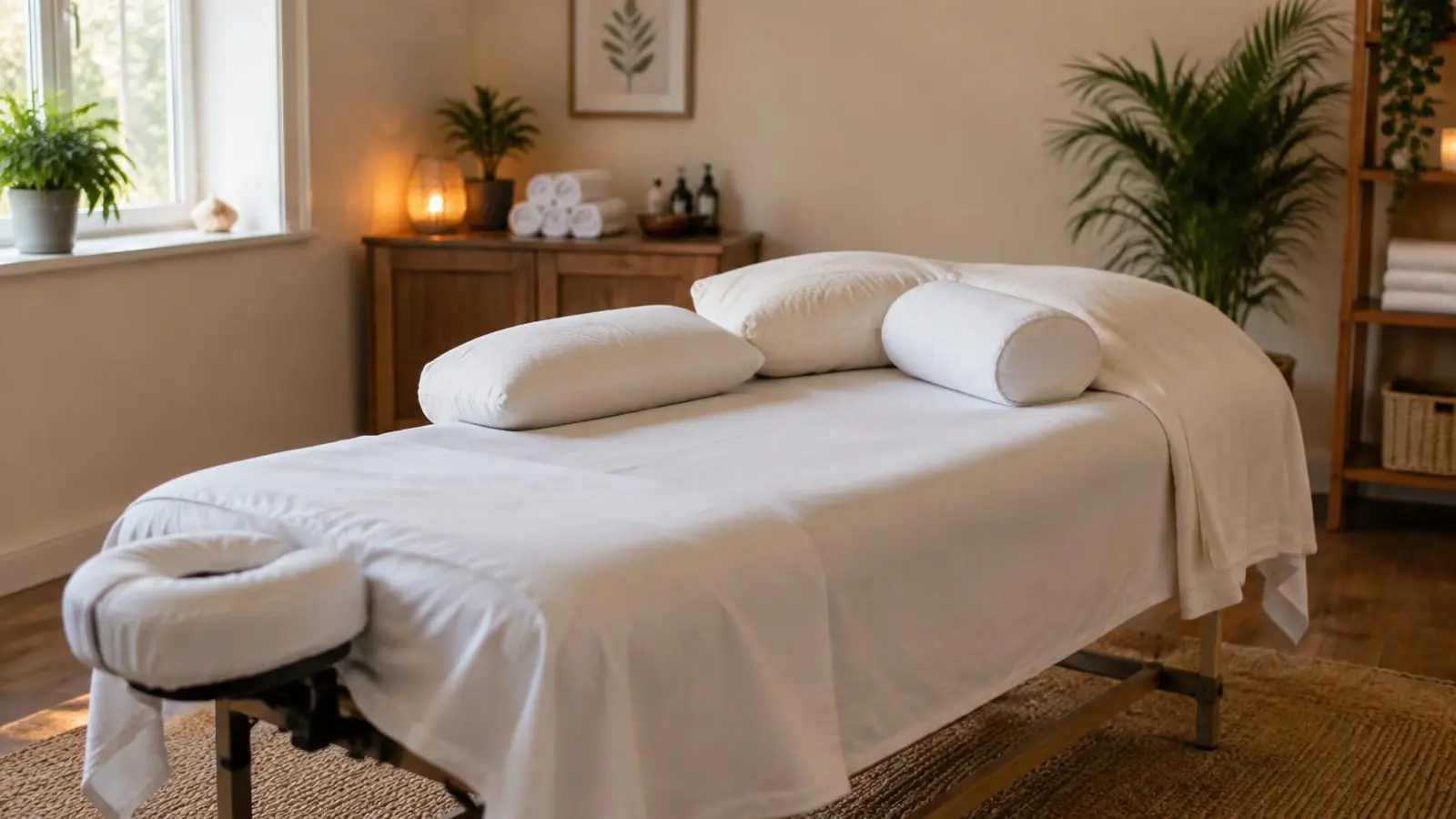
Pregnancy massage in Holborn from the second trimester, given in a supported side lying position for back ache, hips, swelling and sleep.
Pregnancy massage is gentle, well supported massage adapted for the changing body. You are positioned on your side with cushions rather than lying face down, and the pressure is kept comfortable throughout. People usually come for low back and hip ache, tight shoulders, heavy legs, and to rest properly for an hour.
Pregnancy massage is massage adapted for the changing body during pregnancy. You lie on your side, supported with pillows and bolsters, rather than face down, and the pressure and the areas worked are adjusted to what is appropriate at your stage. Sessions at our Holborn clinic run about an hour and most often focus on the low back, hips, shoulders and legs. It is comfort focused, supportive care that sits alongside your midwife and maternity team.
Soft tissue work around the lower back, glutes and hips, which carry most of the extra load in later pregnancy.
Slow, light work on the legs and feet that many people find eases the feeling of heaviness after a long day.
Release for the areas that tighten as posture changes and as sleep becomes broken.
An hour of quiet, supported rest. Many clients say they sleep better on the night of a treatment.
Practical positioning advice for sitting, driving and sleeping, which is often where the ache is being fed.
For many people the value is simply an hour with nothing asked of them, which is in short supply late in pregnancy.
A short conversation about your stage of pregnancy, how you have been feeling, and anything your midwife or doctor has advised.
You are settled on your side with pillows and bolsters, fully covered apart from the area being worked on.
Adapted massage at a pressure you choose, focused on the areas giving you trouble that week.
Simple positioning and stretching suggestions for home, and a plan for how often to come back if you want to.
Acupuncturist and massage therapist at the clinic, offering pregnancy massage alongside deep tissue work.
View full profileAdvanced physiotherapist who works with pregnancy related muscular and joint pain alongside sports and chronic pain.
View full profileFrom the second trimester onwards you are treated on your side, usually the left, with a pillow under the head, one supporting the bump and one between the knees. Lying face down is not used, and neither is lying flat on the back for any length of time, since that can be uncomfortable and reduce blood flow later in pregnancy.
Side lying is not a compromise. It gives the practitioner good access to the low back, glutes, hips, shoulders and legs, which is where nearly all the discomfort of late pregnancy sits, and it is a position most people can settle into for the full hour.
Deep pressure over the abdomen is not used, and pressure is kept comfortable throughout. Practitioners avoid deep work on the lower legs where there is any concern about clotting, and certain points traditionally avoided in pregnancy are left alone.
Tell us before booking if you have bleeding, raised blood pressure, pre-eclampsia, a history of blood clots, reduced foetal movement, a high risk pregnancy or any complication your midwife has raised. In those situations we will ask you to check with your midwife or doctor first, and we may postpone. Pregnancy massage is comfort care, not medical treatment.
Low back and hip ache is the usual reason, closely followed by pelvic discomfort, tight shoulders from changed posture, swollen and heavy legs, and difficulty getting comfortable at night. Many people also book simply for an hour of rest, which becomes harder to find as pregnancy goes on, particularly with a toddler already at home.
Where pain is sharp, one-sided, or makes walking and turning in bed difficult, that may be pelvic girdle pain, which is better assessed by a physiotherapist first. We will say so rather than treat around it, and treatment can still follow once you know what you are dealing with.
"Perfect. Will be back for more!"
Anna S.
"Great location in the heart of the city! I would say it's a quiet oasis in a very busy area, a place to relax after a hard day at work."
Robert D.
Sessions are held at 46 Theobalds Road, a few minutes from Holborn station. Get in touch to arrange a time.
Book Appointment